
Find It® - Hidden Object Games
Guru Puzzle GamePuzzle
4.95.29K Reviews
- Version
- 2.31.0
- Installs
- 5.00M
- Age Rating
- Everyone
Screenshots
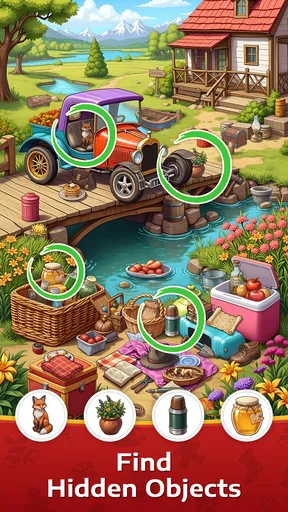
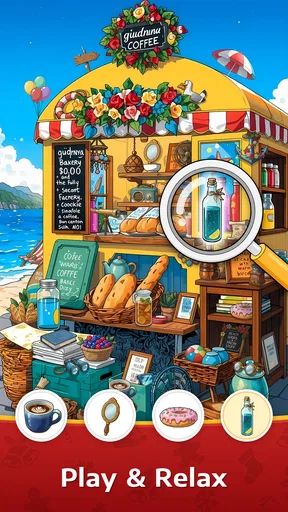

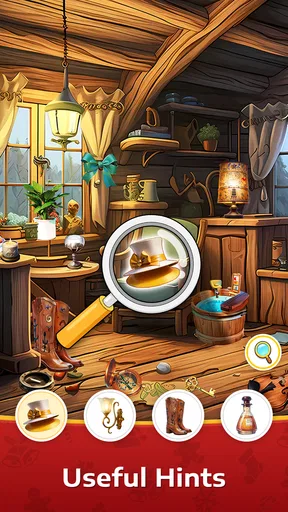
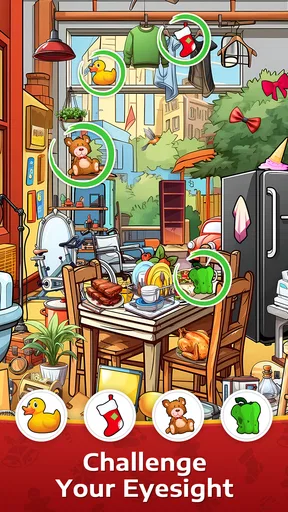

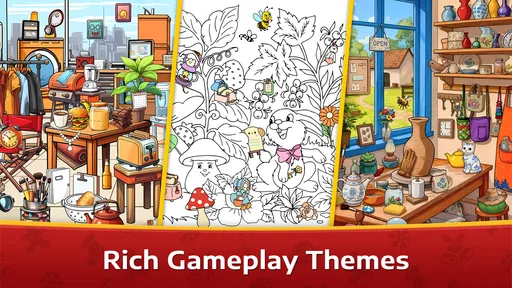
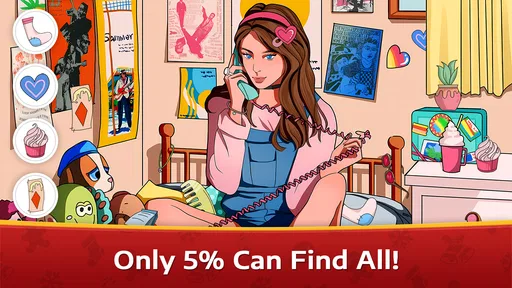
Our Review of Find It® - Hidden Object Games
 Analysis by Appyee
I usually reach for a hidden-object puzzle when I want something absorbing but not demanding. Find It® - Hidden Object Games fits that mood well: it turns a busy picture into a quiet search, asking me to notice small details instead of memorizing rules or reacting quickly. It is a free puzzle game from Guru Puzzle Game, rated for Everyone, and its central appeal is easy to understand within the first few moments: look carefully, locate the requested objects, and keep going at a pace that feels comfortable.
That simplicity is also the reason I would not recommend it blindly to every player. This is not a story-driven adventure, a competitive brain-training contest, or a traditional match-three game with dramatic combos. Its satisfaction comes from observation and completion. If you enjoy methodically clearing a visual scene, it can become a pleasant daily habit. If you need constant novelty, deep strategy, or a strong sense of character progression, the experience may feel too restrained.
How the search loop feels from the first scene onward
The early goal is refreshingly direct. I am given a scene and a set of things to find, then I scan the image until each target is identified. There is no complicated tutorial to remember, which makes the game approachable for children, casual players, and anyone who wants to start without learning a large ruleset. The first success comes from attention rather than speed, so the game immediately communicates what kind of concentration it expects.
That clarity matters on a phone. A hidden-object game can become frustrating if the interface makes targets unclear or if the player has to manage too many instructions at once. Here, the basic task remains visible: compare the requested object with the details in front of you. I found that the best way to begin is not to tap randomly, but to divide the image into zones and inspect each area systematically. That small habit makes the game feel more like a visual routine than a guessing exercise.
For an everyday example, I can imagine opening it while waiting for a coffee, taking a short break between tasks, or winding down before bed. A single scene can be treated as a brief mental reset rather than a commitment to a long session. The game works particularly well in those moments because it does not require me to remember a plot, coordinate with other players, or prepare a strategy before starting.
The early objectives also establish a useful kind of feedback. Finding an object gives me a small sense of completion, while the unfinished list keeps the scene purposeful. I am not simply staring at a picture; I have a reason to inspect it. That distinction is important because visual puzzles can otherwise become passive. The target list turns looking into a sequence of small decisions: should I search by color, shape, location, or association?
My most effective approach is to avoid locking onto one visual feature. If I search only for red items, for example, I may miss a pale object hidden near a similarly shaped background detail. Instead, I move from broad structure to fine detail. I first identify furniture, walls, plants, containers, and other large areas, then inspect edges and crowded spaces. This is one of the game’s quiet strengths: it rewards a repeatable method that improves concentration without making the experience feel like formal study.
The game is free to download, which lowers the barrier to trying it. Optional in-app purchases are listed at $9.99 per item, so I would approach those as a personal convenience decision rather than part of the basic reason to install it. Someone who only wants occasional searches can start without paying. Someone who dislikes any purchase prompts or prefers a completely uninterrupted experience should pay attention to how the free version fits their habits before committing to longer sessions.
Progress is felt through completion, not a complicated character journey
The progression signals are deliberately modest. The strongest one is the act of finishing searches and moving on to another visual challenge. That may sound basic, but it suits the genre. I do not need a fictional reward to understand that I am advancing; the completed scene itself is the evidence. For me, this creates a clean loop: begin with uncertainty, narrow the possibilities, find the last difficult item, and leave with a finished task.
This approach is different from puzzle games built around coins, collection pages, elaborate maps, or upgrade trees. Those systems can provide stronger long-term goals, but they can also distract from the puzzle. In this game, the image remains the center of attention. The reward is the resolution of visual clutter. Players who like seeing a large profile level or a detailed inventory grow may find the progression less expressive, while players who prefer a focused activity may appreciate the lack of extra management.
I also like that the search itself creates several layers of progress within one session. At the beginning, the scene feels crowded and every object competes for attention. After a few discoveries, the remaining targets become more important, and I start adjusting my method. Near the end, one elusive item may force me to slow down and inspect spaces I dismissed earlier. That changing rhythm gives a single scene more texture than the store summary might suggest.
A practical tip is to treat the target list as a set of visual categories rather than isolated words. If two requested objects seem similar, I compare their outlines and surrounding colors before tapping. If a target appears to blend into the background, I scan for unnatural edges or repeated patterns. I also resist the urge to revisit the same central area too soon. Moving around the image in a fixed direction reduces circular searching and makes it easier to notice what I previously skipped.
The developer, Guru Puzzle Game, has positioned this as a casual puzzle rather than a demanding examination of logic. That distinction helps explain why the progression can feel satisfying without becoming stressful. I am not trying to calculate a perfect solution. I am building confidence in my observation, one completed search at a time. The game’s strong average rating of 4.9, alongside around 216 thousand ratings, suggests that this straightforward rhythm connects with a large audience, though individual enjoyment will still depend on how much structure a player wants.
The difficulty curve depends on attention more than complex rules
The challenge comes from visual density and distraction rather than from new mechanics that require a separate tutorial. A scene can look easy at first because the major objects are obvious, but the remaining targets often demand a slower scan. This produces a natural difficulty curve: early discoveries build momentum, while the final few ask for patience and a willingness to reconsider the whole picture.
I think that curve is a good fit for relaxed play. It does not punish me for taking time to observe, and it lets me switch from quick recognition to careful inspection when necessary. That said, the same design can feel repetitive if I want puzzles that constantly change their rules. The game’s challenge is primarily perceptual. It is about noticing, comparing, and staying organized, not about solving a different type of problem every few minutes.
One useful technique is to change the distance between my eyes and the screen. I start at a normal viewing distance to understand the composition, then bring the phone slightly closer when I am checking dense corners. I avoid tapping every suspicious shape because false guesses can break my concentration. Instead, I ask whether the object’s outline, color, and context match the requested item. This makes the search slower, but it also turns difficult moments into genuine observation rather than trial and error.
The game is suitable for an Everyone audience, and I can see why its accessible premise works across ages. A child can enjoy the discovery aspect, while an adult may use it as a low-pressure focus exercise. Still, accessibility of rules does not mean every scene will be equally comfortable for every player. People with difficulty distinguishing small visual details may find crowded images tiring, especially during the final stretch of a search. Anyone who experiences eye strain should keep sessions short and use the game as an occasional activity rather than an endurance test.
Its technical requirements are also friendly for older devices because it supports Android 7.0 and later. That makes it a practical option for someone who does not have a recent phone. The current version is 2.31.0, so I would keep the app updated through the normal platform process, particularly if I rely on it regularly. I would not choose it because of the version number itself; what matters to me is that the game remains easy to start on a broad range of Android phones.
Compared with word-search puzzles, this game asks for less vocabulary and more visual scanning. Compared with match-three games, it has less emphasis on rapid moves and chain reactions. Compared with logic grids or number puzzles, it is more intuitive and less rule-heavy. Those differences make the choice fairly clear. I would pick this game when I want to exercise attention without calculating, racing, or remembering a complicated system. I would choose another puzzle category when I want a measurable strategic solution or a stronger competitive challenge.
Where retention works, and where it can start to feel like pressure
The game sustains play through the natural urge to finish what I have started. Once most objects are found, leaving the scene unfinished feels less appealing than spending another minute checking the corners. That completion pressure is mild and, in my experience, often pleasant. It comes from the puzzle itself rather than from a story cliffhanger or a demanding schedule.
There is a trade-off, though. A player who becomes focused on clearing every scene may turn a relaxing activity into a chore. I recommend setting a simple stopping point: finish one search, or stop when concentration starts to fade. Because the game is built around close visual inspection, continuing while tired can make the experience less enjoyable and may encourage random tapping. The best sessions are the ones where I leave feeling refreshed rather than obligated to complete an arbitrary amount.
The free entry is helpful for testing that balance. I can discover whether the visual search loop suits me before considering any optional purchase priced at $9.99 per item. I would not buy anything merely because I was stuck on one object. First, I would change my scanning pattern, inspect the least obvious edges, and take a short break. A fresh look often works better than forcing the same search while mentally locked onto one area.
That point is especially important for people who are sensitive to monetization in casual games. The game’s core appeal is simple enough that it should be judged by how comfortably the free experience fits into a player’s routine. If purchase prompts interrupt the calm atmosphere for you, this may not be the ideal hidden-object title. On the other hand, if you are comfortable treating optional spending as a way to support a game you use often, the free starting point gives you room to make that decision gradually.
The scale of the audience is notable without changing my personal assessment: the game has passed five million installs and has about 5.3 thousand written reviews. That level of adoption indicates that it is easy for many people to understand and return to, but popularity does not solve the main question. The real issue is whether you enjoy searching through detailed scenes more than you enjoy faster, more strategic, or more story-focused puzzle formats.
For parents, the Everyone rating makes the game easier to consider as a shared casual activity, but I would still play alongside a younger child at first. The useful part is not simply handing over the phone; it is encouraging the child to describe where they are looking and why. That turns the search into a conversation about shapes, colors, position, and attention. For adults, the same approach can make the game a quiet break from scrolling because it asks for active looking rather than passive consumption.
Who should choose it and who should look elsewhere
I would recommend this game to players who like visual puzzles, calm repetition, and small moments of discovery. It is a good match for short breaks, relaxed evenings, and anyone who wants a puzzle that can be understood immediately. It also suits people who prefer progress to come from their own observation instead of from managing resources, upgrading a character, or competing on a leaderboard.
I would be more cautious about recommending it to players who need a strong narrative reason to continue. The search task can hold my attention, but it does not replace a campaign with characters and plot. I would also point strategy-puzzle fans toward another category if they want solutions based on deduction, planning several moves ahead, or mastering a changing ruleset. This game’s challenge is narrower and more sensory: it asks whether I can see what is already in front of me.
Players who dislike repeated visual scanning should probably skip it. The simplicity that makes the game welcoming can also make it feel limited after the novelty wears off. Likewise, anyone looking for a completely hands-off relaxation app will not find that here; the game requires sustained attention, even if the pace is gentle. Its calm atmosphere comes from the absence of frantic action, not from the absence of effort.
My strongest practical recommendation is to use a consistent search route. Divide each scene into broad sections, clear one section before jumping elsewhere, and reserve the final pass for tiny or partially obscured details. When stuck, stop staring at the same object group and deliberately change the order of inspection. This workflow is more reliable than tapping wherever something looks vaguely familiar, and it helps preserve the game’s relaxing character.
Another useful trade-off is session length. A short session keeps the visual task refreshing; a long session may improve persistence but can make every remaining object feel harder than it really is. I would use it as a five-to-fifteen-minute break rather than as the only game on my phone. That role suits its pacing better than expecting it to provide an all-evening progression system.
My verdict on the long-term progression
After looking at its goals, completion signals, difficulty, and retention pressure together, I see Find It® - Hidden Object Games as a focused casual puzzle rather than a broad game platform. Its progression is strongest when I value the act of finishing a visual search. Each completed scene gives a clear stopping point, and the gradual shift from obvious discoveries to careful inspection provides enough challenge to keep the task from feeling entirely passive.
Its limitations are equally clear. The experience does not offer the strategic depth of a logic game, the speed of an arcade puzzle, or the emotional pull of a narrative adventure. The $9.99 individual in-app purchase price also means I would think carefully before spending, especially if I only play occasionally. For me, the free starting point is the sensible way to judge whether the pacing remains enjoyable beyond the first few searches.
The game has been available since March 7, 2024, and its current Android release is 2.31.0. Those details matter mainly for people checking compatibility and recency, while the more important decision is personal: do you enjoy looking closely enough to find satisfaction in small visual discoveries? If yes, this is an easy recommendation for a calm, accessible puzzle break.
I would install it when I want my phone to give me one clear task instead of a stream of distractions. I would skip it when I am in the mood for deep planning, competition, or a story that carries me from one chapter to the next. For the right player, the real reward is not speed but the quiet satisfaction of making a crowded scene understandable. That is a modest goal, but this game handles it cleanly and gives the search enough friction to remain worthwhile.
Verdict
Strengths of Find It® - Hidden Object Games
- Relaxing gameplay suitable for short, casual sessions.
- Large variety of hidden-object scenes to explore.
- Helpful hints assist when an item is difficult to find.
- Simple controls make it accessible for most players.
- Offline play may be available for some content and modes.
Limitations of Find It® - Hidden Object Games
- Some levels can feel repetitive after extended play.
- Timed challenges may frustrate players who prefer a slower pace.
- Hints and extra content may depend on in-app purchases.
- Small objects can be difficult to spot on smaller screens.
- Advertising may interrupt gameplay between scenes.
Other Releases by Guru Puzzle Game
View All
Ball Sort Puzzle - Color Game
Puzzle4.9

Water Sort Puzzle - Sort Color
Puzzle4.8


Differences - Find & Spot It
Puzzle4.9
Similar Picks in This Category
View All
Block Blast!
HungryStudio4.8

Braindom: Brain Games Test
Lahana Game Studio4.6

AMAZE!
CrazyLabs LTD4.6

Sudoku - Classic Sudoku Puzzle
Oakever Games4.7

Art Puzzle - Puzzle Games
Easybrain4.8

Amaze GO!
Oakever Games4.9
Frequently Asked Questions
What is Find It® - Hidden Object Games?
Find It® - Hidden Object Games is a casual puzzle game focused on spotting objects hidden within detailed illustrations. Each level presents a colorful scene and asks you to locate specific items, making it easy to understand but increasingly challenging to complete. It is designed for short play sessions, although the growing number of scenes can keep you engaged for much longer.
How does the gameplay work?
Gameplay is based on carefully examining an image and tapping the objects listed on the screen. Some items are clearly visible, while others blend into the background, appear very small, or are partially covered by surrounding details. You generally need observation, patience, and attention to color and shape rather than fast reflexes. Hints may help when you become stuck.
Is Find It® - Hidden Object Games suitable for children?
The game is generally accessible to children because its controls are simple and the main activity involves visual searching rather than complex instructions. However, difficulty, advertisements, in-app purchases, and the specific content of individual scenes should be checked by parents before allowing younger children to play. Adult supervision is also recommended if the device is connected to a payment account.
Can I play Find It® - Hidden Object Games offline?
Many hidden-object levels may be playable without a constant internet connection once the necessary game content has loaded, which makes the app convenient for travel or areas with limited connectivity. Nevertheless, features such as advertisements, rewards, updates, synchronization, or optional purchases may require internet access. Availability can also vary by version, so testing offline mode after installation is advisable.
Does Find It® - Hidden Object Games contain ads or in-app purchases?
Like many free-to-download mobile puzzle games, Find It® - Hidden Object Games may include advertising and optional purchases. Ads can appear between levels or when you request extra hints, while purchases may provide currency, remove advertisements, or unlock assistance. Before downloading, review the store listing and parental controls, especially if children use the device or purchases are linked to your account.
Play our best games!


